
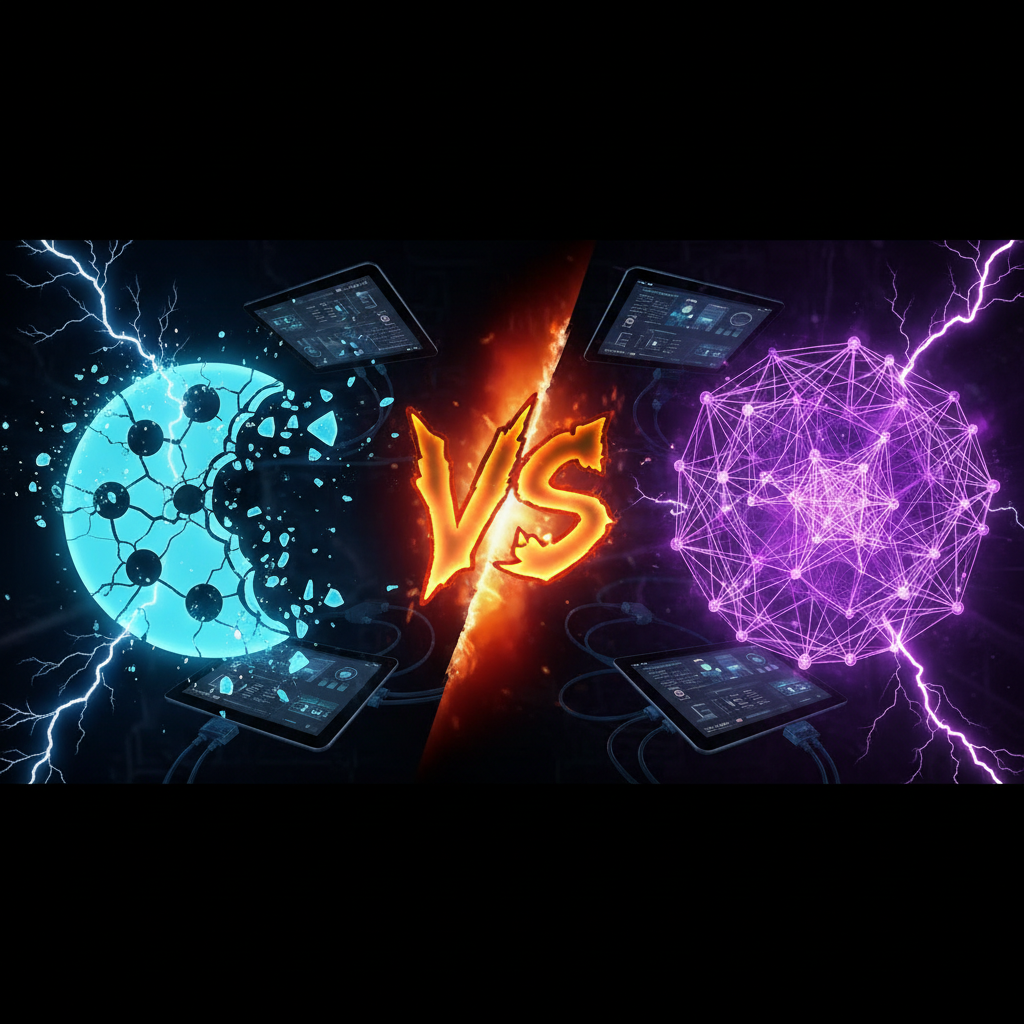
The world of programmatic advertising is undergoing a seismic transformation in 2026. As third-party cookies continue their long-awaited sunset and Connected TV (CTV) advertising explodes in popularity, the debate between device graph technology and traditional cookie-based tracking has never been more relevant. Marketers, media buyers, and advertisers are rapidly rethinking their identity resolution strategies to stay ahead of a rapidly shifting landscape. Understanding how a device graph works — and why it’s replacing cookies as the backbone of modern cross-device targeting — is no longer optional. It’s a competitive necessity. In this article, we’ll break down five shocking CTV shifts in 2026 that every media buyer needs to know, and explain exactly how device graphs are reshaping the future of digital advertising.
What Is a Device Graph and Why Does It Matter in 2026?
A device graph is a data infrastructure that maps the relationships between multiple devices — smartphones, tablets, smart TVs, desktops, and laptops — to a single user or household. Unlike traditional cookies, which only track behavior within a single browser on a single device, a device graph creates a unified, persistent identity across all touchpoints.
In 2026, with cookie-based tracking nearly obsolete in major browsers and CTV viewership surpassing traditional linear TV in many demographics, device graphs have become the cornerstone of effective cross-device advertising. They allow advertisers to understand the full customer journey — from a mobile ad click to a CTV conversion — without relying on fragile, consent-heavy cookie data.
There are two primary types of device graphs that media buyers rely on:
- Deterministic device graphs: Built on authenticated, logged-in user data. These are highly accurate because they’re based on confirmed identity signals like email addresses or phone numbers.
- Probabilistic device graphs: Built using statistical modeling and behavioral signals. These are broader in reach but slightly less precise than deterministic methods.
The most powerful device graphs in 2026 combine both approaches, offering massive scale with high accuracy — something cookies could never achieve across the fragmented CTV ecosystem.
Cookie Deprecation and Its Ripple Effect on CTV Advertising
Let’s be clear: cookies were never built for CTV. Smart TVs, streaming apps, and OTT platforms don’t use browsers in the traditional sense, which means cookies were always a square peg in a round hole when it came to connected television. But their deprecation across Chrome and other browsers has sent shockwaves through the entire programmatic ecosystem.
Here’s what cookie deprecation has meant for CTV advertisers in practice:
- Audience targeting accuracy dropped significantly for advertisers still relying on cookie-based DSPs.
- Retargeting campaigns became nearly impossible to execute cleanly across web-to-CTV journeys.
- Attribution gaps widened, making it harder to connect CTV ad exposure to downstream conversions.
- CPMs for cookie-dependent inventory plummeted as buyers lost confidence in addressability.
- CTV-native identity solutions surged in investment as publishers and platforms rushed to fill the void.
This vacuum created the perfect conditions for device graph technology to step in and dominate. The CTV space, already operating outside the cookie world, was primed for a better identity solution — and device graphs delivered exactly that.
Shift #1: Identity Resolution Moves to the Household Level
One of the most significant CTV shifts in 2026 is the move from individual-level identity to household-level identity resolution. This is a fundamental change in how media buyers think about targeting and reach.
In the cookie era, advertisers targeted individual browser sessions — a fragmented, privacy-invasive approach that often resulted in the same person seeing the same ad repeatedly across different devices. The household-level device graph changes everything.
By mapping all devices connected to a single home network — smart TVs, mobile phones, gaming consoles, voice assistants — advertisers can now:
- Deliver sequential storytelling across the entire household’s viewing journey
- Avoid over-targeting a single household member while missing others
- Build more accurate reach and frequency models at the household level
- Create coordinated messaging strategies that speak to the household as a buying unit
This is particularly powerful for categories like automotive, home improvement, insurance, and financial services — industries where purchase decisions are often made collectively within a household rather than by a single individual.
The shift to household-level targeting also aligns better with how CTV content is consumed. Unlike mobile, where one device equals one person, a TV screen is typically a shared experience. Household-level device graphs reflect this reality in a way that cookies never could. – Zip Code Level Targeting: 5 Proven CTV Wins
Shift #2: Device Graph Technology Becomes the Gold Standard for CTV Targeting
Perhaps the most impactful shift in 2026 is the near-universal adoption of device graph technology as the primary identity layer for CTV campaign execution. Major DSPs, SSPs, and CTV publishers have migrated away from cookie-dependent targeting and fully embraced graph-based identity solutions.
This shift is happening across every level of the programmatic stack:
- Demand-Side Platforms (DSPs) now prioritize device graph IDs over cookie IDs when making bid decisions
- Supply-Side Platforms (SSPs) are passing device graph signals in bid stream data to enable better buyer matching
- Data Management Platforms (DMPs) have evolved into Customer Data Platforms (CDPs) that integrate natively with device graph providers
- CTV publishers like Roku, Amazon Fire TV, and Samsung Ads are building proprietary device graphs from their massive authenticated user bases
The result is a more connected, more accurate, and more privacy-compliant targeting ecosystem. Advertisers who have fully integrated device graph technology into their media buying workflows are seeing significantly better campaign performance metrics — including higher completion rates, better brand recall, and more efficient cost-per-acquisition numbers.
Leading device graph providers in 2026 include LiveRamp’s Identity Link, The Trade Desk’s Unified ID 2.0 (UID2), Experian’s CrossIX, and several publisher-owned proprietary graph solutions. Each offers different tradeoffs in terms of scale, accuracy, and privacy compliance.
Shift #3: First-Party Data Partnerships Explode in Value
The deprecation of third-party cookies has made first-party data the most valuable currency in digital advertising. In 2026, the savviest media buyers are no longer just buying audiences — they’re brokering first-party data partnerships that power their device graph activation. (Learn more about device graph)
Here’s what this looks like in practice:
- Advertisers onboard their CRM data (email lists, purchase histories, loyalty program members) into clean room environments
- Publishers match that data against their authenticated user base using device graph identity resolution
- Matched audiences are activated across CTV inventory without any cookies or third-party data changing hands
- Performance is measured using privacy-safe clean room analytics rather than pixel-based tracking
Clean rooms like Google’s Ads Data Hub, Amazon Marketing Cloud, and LiveRamp’s Data Collaboration platform have become essential infrastructure for this type of first-party data activation. They allow advertisers to leverage the power of publisher device graphs without exposing personally identifiable information (PII).
This model is fundamentally more privacy-respecting than cookie-based targeting, which is why regulators in the EU, US, and beyond have been largely supportive of these approaches. First-party data + device graph = the privacy-compliant future of CTV targeting.
Shift #4: Cross-Device Frequency Capping Finally Works at Scale
Ask any media buyer about their biggest frustrations in the cookie era, and frequency capping failures will almost always be near the top of the list. Without a persistent cross-device identity, advertisers had no reliable way to prevent the same user from seeing the same ad 20 times across different devices and browsers.
In 2026, device graph technology has finally solved cross-device frequency capping at scale — and this is a bigger deal than many advertisers realize.
The business impact of proper frequency management is enormous:
- Ad fatigue is dramatically reduced, improving brand sentiment and consumer experience
- Media budgets are optimized by eliminating wasted impressions on over-targeted individuals
- Incremental reach improves as budget previously spent on frequency waste gets redirected to new audiences
- Brand safety improves because advertisers can ensure they’re not overwhelming sensitive audience segments
CTV is particularly important here. Because CTV and linear TV are now often bought together in converged planning tools, device graphs allow buyers to set unified frequency caps that account for total video exposure — not just digital or just linear. This kind of total video frequency management was essentially impossible in the cookie era.
The shift is also enabling better sequential messaging — where a viewer sees ad A on their phone, then ad B on their CTV, then ad C on their laptop — all in the correct order, at the right frequency, without any cookie dependency. This is the kind of sophisticated storytelling that brand advertisers have dreamed about for years. – MOAT in Connected TV: 5 Essential Viewability Metrics
Shift #5: Attribution and Measurement Undergo a Complete Overhaul
Perhaps no area of CTV advertising has been more dramatically transformed by the device graph revolution than attribution and measurement. The cookie-based last-click attribution model that dominated digital advertising for two decades is effectively dead in 2026.
In its place, a new measurement paradigm has emerged — one built on device graph-powered identity resolution, incrementality testing, and privacy-safe data collaboration.
Here’s what the new CTV measurement stack looks like in 2026:
- Exposure-based attribution: Device graphs connect CTV ad exposures to downstream consumer actions (website visits, app installs, store visits, purchases) without cookies
- Incrementality measurement: A/B testing frameworks using matched control groups — made possible by household-level device graph segmentation
- Media Mix Modeling (MMM) renaissance: Advanced MMM tools now ingest device graph data to better isolate CTV’s contribution to overall marketing effectiveness
- Unified reach and frequency reporting: Across linear TV, CTV, digital video, and audio — all powered by a common device graph identity layer
- Clean room attribution: Privacy-safe environments where advertiser purchase data meets publisher exposure data without exposing raw PII
The brands that are winning in 2026 are those that have invested in robust measurement infrastructure built around device graph identity. They’re not just counting impressions — they’re understanding the true causal impact of their CTV investments with a level of rigor that was impossible in the cookie era.
Device Graph vs Cookie: A Head-to-Head Comparison
To understand why the industry has moved so decisively toward device graph technology, it helps to compare the two approaches directly across the dimensions that matter most to media buyers. (Learn more about device graph)
Accuracy and Persistence
Cookies are browser-specific and easily deleted, blocked, or expired. A single user with three browsers on two devices might generate six different cookie IDs — creating massive fragmentation. Device graphs, especially deterministic ones built on authenticated data, maintain persistent identity across devices and sessions without any reliance on browser storage.
Cross-Device Coverage
Cookies have zero native capability to connect identity across devices. All cross-device matching done with cookies requires probabilistic guesswork. Device graphs are purpose-built for cross-device identity — this is their entire reason for existing. They excel at linking mobile, desktop, and CTV environments.
CTV Compatibility
Cookies are fundamentally incompatible with CTV environments. They simply don’t exist in the connected TV ecosystem. Device graphs are native to CTV, using IP addresses, device IDs, and authenticated signals to build identity in environments where cookies never had a foothold.
Privacy Compliance
Cookies (especially third-party cookies) have been the primary target of GDPR, CCPA, and other privacy regulations. Their use requires complex consent frameworks that often result in poor user experiences. Device graphs built on first-party data and authenticated identity are far more aligned with modern privacy regulations when properly implemented.
Scalability
Cookies in 2026 provide dramatically reduced scale as fewer users accept tracking across the open web. Device graphs are expanding in scale as more platforms build authenticated user bases and data partnerships grow.
How Media Buyers Can Adapt Their Strategy Right Now
Understanding the theoretical shift from cookies to device graphs is one thing — actually adapting your media buying strategy is another. Here are the most important steps media buyers should take to position themselves for success in the post-cookie CTV era.
Audit Your Current Identity Infrastructure
- Identify what percentage of your current targeting and measurement relies on third-party cookies
- Map out which campaigns and channels are most exposed to cookie deprecation risk
- Assess your current device graph partnerships and whether they cover your key audiences
Invest in First-Party Data Collection and Activation
- Build or strengthen your email capture and CRM strategies to grow your authenticated audience
- Onboard first-party data to identity resolution platforms that connect to major device graphs
- Establish data clean room relationships with key CTV publishers to enable privacy-safe matching
Choose Your Device Graph Partners Carefully
Not all device graphs are equal. When evaluating providers, consider:
- Scale: How many device connections does the graph cover in your target markets?
- Accuracy: What percentage of the graph is deterministic vs. probabilistic?
- CTV coverage: Does the graph include major streaming platforms and smart TV manufacturers?
- Privacy compliance: Is the graph built on consented, first-party data signals?
- DSP integration: Is the graph natively integrated into the DSPs and SSPs you use for buying?
Rebuild Your Measurement Framework
- Move away from last-click attribution toward multi-touch, incrementality-based measurement
- Implement clean room solutions to enable exposure-based attribution without cookies
- Integrate device graph identity into your MMM inputs to better capture CTV contribution
Test, Learn, and Iterate
The post-cookie measurement landscape is still evolving rapidly. The best media buyers in 2026 are those who have built testing and learning into the core of their workflow. Run controlled experiments using household-level device graph segmentation. Measure incrementality rigorously. Document what works and scale it fast.
Conclusion: The Future Belongs to Graph-Based Identity
The five CTV shifts we’ve explored in this article tell a coherent story: the future of programmatic advertising — and CTV advertising in particular — belongs to device graph technology. The cookie era is over. The identity era, powered by persistent, cross-device, privacy-respecting graph infrastructure, has fully arrived.
Media buyers who continue to rely on cookie-based strategies in 2026 are not just leaving performance on the table — they’re risking irrelevance as the industry rapidly moves forward. The good news is that device graph technology is more accessible, more accurate, and more scalable than ever.
Whether you’re a brand marketer trying to reach cord-cutters on CTV, an agency optimizing cross-device frequency for a major campaign, or a publisher trying to monetize your authenticated audience more effectively, the device graph is your most powerful tool. Understanding it, investing in it, and building your strategy around it isn’t just smart media buying — it’s the only way to compete in the connected television landscape of 2026 and beyond.
The shift from cookie to device graph is not a future possibility — it’s the present reality. The question is no longer whether to make the transition, but how quickly and how thoroughly you can execute it. Those who move fastest will own the most valuable audiences, build the most accurate measurement systems, and deliver the most effective CTV campaigns in a world that has definitively moved beyond the third-party cookie.