
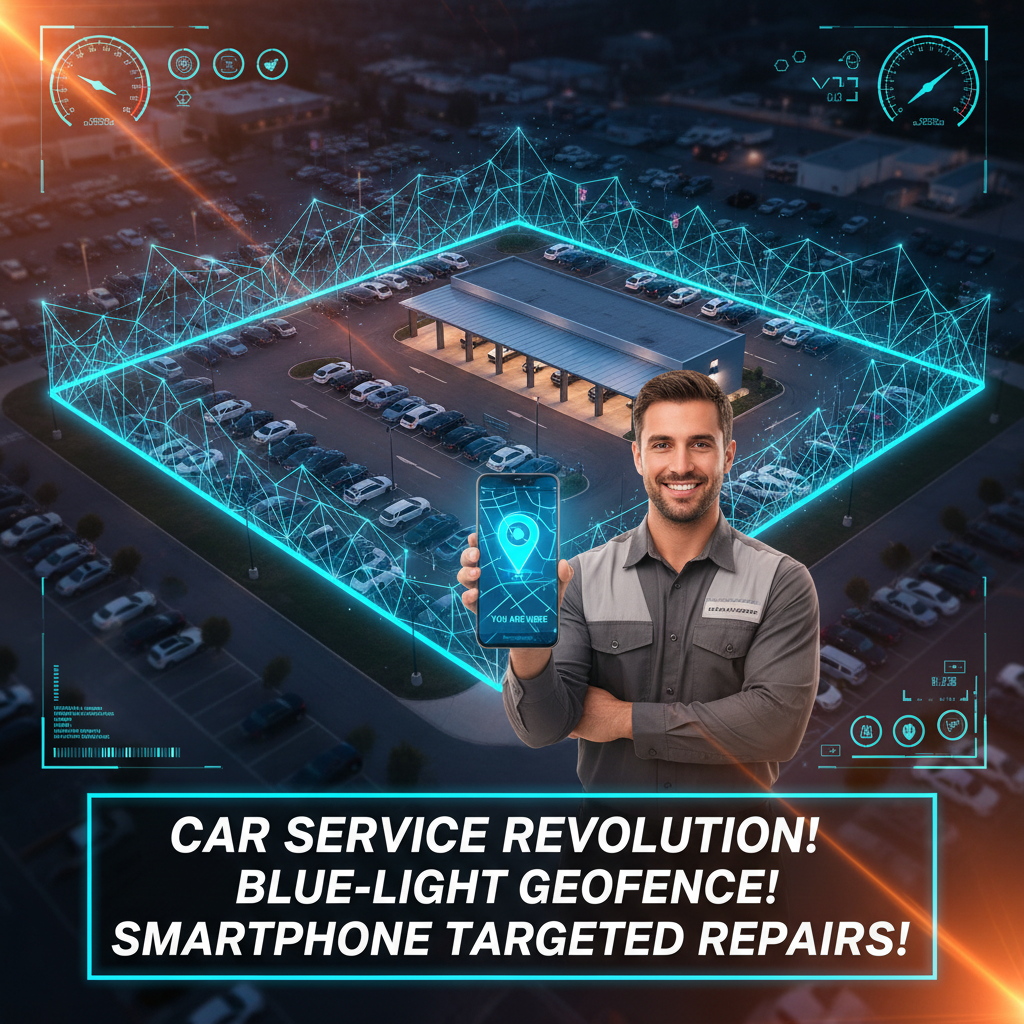
In today’s hyper-competitive automotive market, dealerships are constantly searching for smarter, more targeted ways to reach potential customers. Geofencing has emerged as one of the most powerful digital advertising tools available to auto dealers — and for good reason.
By drawing a virtual boundary around a specific geographic area, geofencing allows dealerships to deliver highly targeted ads to consumers who enter, exit, or spend time within that defined zone. Whether you’re targeting competitor lots, service centers, or high-traffic commercial areas, geofencing puts your message in front of the right people at exactly the right moment. This article dives deep into how geofencing can specifically transform your service drive — one of the most profitable yet often overlooked areas of a dealership — with five proven wins that deliver measurable results.
What Is Geofencing and How Does It Work for Auto Dealers?
Geofencing is a location-based digital marketing technology that uses GPS, Wi-Fi, cellular data, or RFID signals to create a virtual geographic boundary — called a “geofence” — around a physical location. When a mobile device enters or exits this boundary, it can trigger a targeted advertisement, push notification, or a tracking pixel that allows for remarketing later.
For auto dealers, this technology opens up a world of opportunities. You can geofence your own dealership, a competitor’s lot, a nearby oil change chain, or even a shopping mall parking lot where your target demographic tends to gather. The ads are then served to users on their mobile devices through apps, mobile browsers, and display networks.
Here’s a simplified breakdown of how geofencing works:
- A virtual boundary is drawn around a physical location using mapping tools.
- A consumer enters the geofenced area with their smartphone or mobile device.
- The device is identified via GPS, Wi-Fi, or cellular signal.
- An ad is triggered and served to that device — either immediately or through retargeting later.
- The consumer sees your ad on their apps or browser, prompting them to take action.
The beauty of geofencing lies in its precision. Instead of broad demographic targeting, you’re reaching people based on their real-world behavior and physical location — making it one of the most intent-driven forms of digital advertising available today.
Why the Service Drive Is a Goldmine for Geofencing Campaigns
Most dealerships focus their marketing budgets on new vehicle sales. But the service drive is where long-term profitability lives. Studies show that service and parts departments account for a significant portion of a dealership’s total gross profit — often more than 40% in well-run stores. Yet, many service departments struggle with customer retention and appointment volume.
Consider these compelling facts:
- The average vehicle owner takes their car in for service 2 to 4 times per year.
- Customers who service at a dealership are 3x more likely to purchase their next vehicle from that same dealership.
- Independent repair shops and quick-lube chains are aggressively competing for your customers — and winning.
- Many dealerships lose service customers after the warranty period ends due to perceived high costs and lack of targeted outreach.
This is precisely where geofencing steps in. By targeting the right people in the right places, your service drive can recapture lost customers, attract new ones, and build the kind of loyalty that drives long-term revenue. Let’s explore the five proven wins in detail.
Win #1: Conquesting Competitor Service Centers with Geofencing
Competitor conquesting is one of the most powerful applications of geofencing for auto dealer service departments. The strategy is straightforward: you draw a geofence around a competitor’s service center, independent repair shop, or quick-lube chain, and then serve your dealership’s ads to anyone who visits those locations.
Think about it — someone dropping their car off at a Jiffy Lube or a competing franchise dealership is clearly in the market for automotive service. They are high-intent consumers who are actively spending money on vehicle maintenance. This makes them perfect targets for your dealership’s service offers.
How to Execute a Competitor Conquesting Geofencing Campaign
- Identify your top 5–10 competitor service locations within your market area.
- Build geofences around each location with a radius of 100 to 500 feet for precise targeting.
- Create compelling ad creative that highlights your competitive advantages — such as certified technicians, OEM parts, loaner vehicles, or price-match guarantees.
- Use retargeting to continue serving ads to these consumers for up to 30 days after their visit.
- Track foot traffic conversions to see how many of those targeted users eventually visit your service drive.
The messaging here is critical. Your ad shouldn’t just scream “come to us instead.” It should communicate clear value propositions. For example: “Did you just get an oil change? Come to [Dealership Name] next time and get your first service FREE.” This kind of offer gives the customer a tangible reason to switch. – Optimizing Media Buying Strategies for Auto Dealerships: Boost Sales with Effective Advertising Campaigns
Conquesting campaigns typically deliver visit lift rates of 15–30% when executed correctly, meaning a significant percentage of people who saw your ad at a competitor’s location ended up visiting your dealership. That’s an incredible return on investment for your service marketing budget.
Win #2: Re-Engaging Lapsed Service Customers
Every dealership has a massive database of past customers who used the service drive once — maybe twice — and then disappeared. These lapsed service customers represent a huge untapped revenue opportunity. The challenge is getting back in front of them before they become loyal to a competitor.
Geofencing allows you to reach these customers in powerful new ways. Here’s how:
Geofencing Your Own Dealership for Audience Segmentation
By placing a geofence around your dealership, you can capture the device IDs of people who visit your lot. Combined with your CRM data, you can identify customers who haven’t returned in 6, 12, or 18 months and serve them hyper-targeted ads reminding them it’s time to come back. (Learn more about geofencing)
Targeting High-Traffic Areas Where Lapsed Customers Live and Work
You can also use demographic and behavioral data alongside geofencing to target customers in residential zip codes or near their workplaces. If you know a lapsed customer lives in a specific neighborhood, you can geofence that area and serve them a personalized offer.
Effective re-engagement ads for lapsed service customers should include:
- A personalized message acknowledging their history with the dealership.
- A special discount or offer — such as “We miss you! Get 20% off your next oil change.”
- A clear and easy call-to-action (CTA) like “Book Your Appointment Now.”
- Urgency-driven language such as “Offer ends Sunday” to prompt immediate action.
Re-engagement campaigns using geofencing have been shown to reduce customer attrition significantly and can recover 10–20% of lapsed customers when paired with strong creative and a compelling offer.
Win #3: Upselling During the Service Visit
Here’s a creative application of geofencing that many dealers overlook: using it to upsell customers who are already on your lot. When a customer drops their vehicle off for an oil change or routine maintenance, they often have time to wait — either in your lounge or nearby. This is prime advertising real estate.
By geofencing your own service drive and waiting areas, you can serve targeted ads to customers’ mobile devices while they’re physically on your property. These ads can promote:
- Tire rotations and replacements — “Your tires may need attention. Ask your service advisor today.”
- Brake inspections and replacements — “Free brake inspection with any oil change service.”
- Seasonal maintenance packages — “Winter is coming. Get your vehicle winter-ready today.”
- Trade-in offers — “While your car is being serviced, get a free trade-in appraisal.”
- Extended warranties or service contracts — “Protect your vehicle beyond the factory warranty.”
This strategy works because the consumer is already in a service mindset. They’re thinking about their vehicle, they’re physically present at your dealership, and they have a few minutes to browse their phone. A well-timed, relevant ad can be the nudge that gets them to say “yes” to an additional service they might have otherwise declined.
The result? Higher repair order averages and more revenue per service visit — without requiring your service advisors to apply heavy sales pressure. – Mastering Media Buying Strategies for Auto Dealerships: Boost Sales and Maximize ROI with Effective Advertising
Win #4: Driving Appointment Bookings with Hyperlocal Geofencing Ads
One of the most practical and immediate wins from geofencing for auto dealer service departments is the ability to drive online appointment bookings. Most dealerships now offer online scheduling for service appointments, but getting customers to actually use the tool requires awareness and motivation.
Geofencing allows you to target consumers in specific locations and drive them directly to your online scheduling page. Here are some of the most effective location targets for appointment-booking campaigns:
Best Geofencing Locations for Service Appointment Campaigns
- Major employers and office parks — People who work nearby often need to fit service appointments around their work schedule. Target them with ads highlighting your early morning drop-off or after-hours pickup options.
- Grocery stores and shopping centers — Reach busy parents and professionals who are nearby and receptive to convenient service offers.
- Gas stations near your dealership — Someone stopping for gas is thinking about their car. This is a perfect moment to remind them about their next oil change.
- Residential neighborhoods in your primary market area (PMA) — Target homeowners in your zip codes with seasonal service reminders.
- Your dealership’s own lot — Convert service inquiries into booked appointments before prospects walk out the door.
The ads for appointment-booking campaigns should be simple, visual, and action-oriented. Use a clear CTA button like “Schedule Service Now” that links directly to your online booking page. The fewer clicks it takes, the higher your conversion rate will be.
Pro tip: Use time-based geo-triggers to serve ads on Monday mornings (when people are planning their week) or on Friday afternoons (when they’re thinking about weekend errands). Timing your geofencing ads strategically can significantly boost your appointment booking rate. (Learn more about geofencing)
Win #5: Building Long-Term Customer Loyalty Through Geofencing
The final — and perhaps most strategic — win from geofencing for auto dealer service departments is its ability to build long-term customer loyalty. Acquiring a new service customer costs significantly more than retaining an existing one. Geofencing gives you the tools to nurture relationships with your existing customer base continuously and cost-effectively.
Loyalty-Building Geofencing Strategies
- Service reminder campaigns: Geofence customers’ home neighborhoods and serve them timely reminders when their vehicle is due for scheduled maintenance based on mileage or time intervals.
- Exclusive loyalty offers: Reward repeat service customers with special discounts or perks served via geofencing ads when they’re nearby your dealership.
- Post-service follow-up ads: After a customer visits your service drive, serve them follow-up ads thanking them for their visit and previewing their next recommended service — keeping the relationship warm.
- Seasonal campaign targeting: Align geofencing campaigns with seasonal service needs (winter prep, summer coolant checks, tire rotations) to provide genuinely helpful reminders that position your dealership as a trusted partner.
- Event-based targeting: Geofence auto shows, community events, or local festivals where your target customers are likely to attend, and serve brand awareness ads that reinforce your dealership’s presence in the community.
Customers who feel valued and consistently reminded of your services in a non-intrusive, helpful way are far more likely to remain loyal over the long term. And loyal service customers, as we noted earlier, are dramatically more likely to buy their next vehicle from your dealership too.
This flywheel effect — where great service experiences drive loyalty, and loyalty drives new vehicle sales — is the ultimate goal of any dealership’s marketing strategy. Geofencing is one of the few tools that can actively nurture this cycle at scale.
Best Practices for Geofencing Auto Dealer Campaigns
To get the most out of your geofencing investment, it’s important to follow proven best practices. Here’s what the top-performing dealerships are doing differently:
Creative and Messaging Best Practices
- Keep your ad copy short and punchy — mobile users scroll fast.
- Use high-quality visuals that are relevant to automotive services.
- Always include a clear, specific CTA — avoid vague phrases like “Learn More.”
- Incorporate local language or references to make ads feel personal and relevant.
- A/B test different creative versions to optimize performance over time.
Technical Best Practices for Geofencing
- Use precise geofence boundaries — avoid drawing fences that are too large, as this dilutes targeting accuracy.
- Set appropriate dwell time thresholds — require users to spend at least 5–10 minutes in the geofenced area before triggering an ad to filter out drive-bys.
- Leverage conversion zones to track how many ad recipients actually visit your dealership after seeing your geofencing ads.
- Integrate geofencing data with your CRM and DMS for richer audience segmentation and reporting.
- Ensure your campaigns are compliant with privacy regulations including CCPA and other applicable laws.
Budget and Timing Best Practices
- Start with a focused budget on one or two high-priority geofencing strategies before scaling.
- Run campaigns continuously rather than in short bursts for better audience building and retargeting.
- Align campaign budgets with seasonal service demand — spring and fall tend to be peak times for automotive service activity.
- Allocate a portion of your budget specifically to retargeting, which typically delivers the highest conversion rates.
Measuring the Success of Your Geofencing Campaigns
One of the most significant advantages of geofencing over traditional advertising is its measurability. You don’t have to guess whether your investment is working. Here are the key metrics to track:
Key Geofencing Performance Metrics for Auto Dealers
- Impressions: How many times your ad was displayed to targeted users.
- Click-Through Rate (CTR): The percentage of users who clicked on your ad — a benchmark of creative effectiveness.
- Walk-In Rate (Foot Traffic Lift): The percentage of users who saw your ad and subsequently visited your dealership — one of the most valuable metrics.
- Cost Per Visit (CPV): How much you’re spending for each physical visit to your service drive generated by the campaign.
- Appointment Conversion Rate: How many ad clicks resulted in a booked service appointment.
- Revenue Per Campaign: Track the actual repair orders generated from customers acquired through geofencing efforts.
- Return on Ad Spend (ROAS): The overall revenue generated for every dollar spent on geofencing advertising.
Work with your geofencing provider to set up conversion zones around your dealership. These virtual boundaries track when a device that was exposed to your ad subsequently enters your lot — giving you clear attribution data that proves the value of your campaigns.
Most reputable geofencing platforms provide detailed dashboards with real-time data, allowing you to monitor performance and make adjustments quickly. This agility is one of the key advantages of digital geofencing over traditional media like direct mail or radio.
Conclusion: Why Geofencing Is the Future of Auto Dealer Marketing
The automotive industry is evolving rapidly, and so are consumer expectations. Today’s car owners demand personalized, relevant, and timely communication — and geofencing delivers exactly that. From conquesting competitors and re-engaging lapsed customers to upselling during service visits and building lasting loyalty, geofencing offers auto dealers five clear, proven wins for their service drive.
Unlike traditional advertising that casts a wide net and hopes for the best, geofencing is surgical in its precision. You’re reaching the right person, in the right place, at the right moment — with the right message. That level of targeting efficiency translates directly into lower cost-per-acquisition, higher return on ad spend, and ultimately, a more profitable service department.
The dealerships that are winning in today’s market aren’t just spending more on advertising — they’re spending smarter. Geofencing is one of the most powerful tools in that smart-spending arsenal. If your service drive isn’t yet leveraging geofencing technology, now is the time to start.
Ready to launch your first geofencing campaign? Partner with an experienced automotive digital marketing agency that understands the nuances of dealership marketing and can help you design, execute, and optimize a geofencing strategy that delivers real, measurable results for your service department. The five wins outlined in this article aren’t theoretical — they’re happening every day at dealerships across the country. It’s time to make them happen for yours.